

Bridging the Gap
If you’ve been following this blog for a while, you know I usually write about things that have concrete inputs, outputs, CLI commands screen captures and measurable effects: technology, systems, design patterns, and practical lessons for builders and creators.
This one is different.
It started with a word, a dream, and a nagging superstition my grandmothers used to whisper with equal parts reverence and humor. It wanders. It questions. It doesn’t have diagrams or code snippets.
So before you scroll on: this is a dreamt-up story, and I’m very sorry if it sounds crazy, but maybe not too crazy to be useful.

Because even in technical systems — and especially when we design them — we’re really wrestling with human intention: why we build, what we value, and how we contribute so that the structure we leave behind doesn’t hollow out.
The piece that follows isn’t about tech. It’s about why ideas matter, why creativity matters, and what happens when we stop participating — not just running through life, but actively building it.
If that sounds a little “out there,” then maybe you’re already in the right frame of mind for this one.
A Small Warning Before We Begin
This post was born in the middle of the night.
Which already tells you two things:
It may sound more profound than it deserves to be.
I’m sorry in advance if it occasionally wanders into “guy staring at the ceiling at 3:14am” territory.
I woke up with what felt like a fully formed idea. Naturally, I wrote a few cryptic notes on my phone — the intellectual equivalent of leaving yourself a voicemail while half asleep — and went back to sleep convinced I’d captured something important.
Weeks later, I had no idea what any of it meant.
All I had were fragments. A couple of words. No narrative. No conclusion. Just enough to be mildly infuriating.
One of the words was run.
I should be clear up front: I didn’t come up with this myself.
According to the editors of the Oxford English Dictionary (OED), the three-letter word run is now officially the most complicated word in the English language.
In the upcoming third edition of the OED, the verb “run” alone has approximately 645 different meanings. It took a single lexicographer nine months of full-time research just to categorize all of its uses.
And the more you “run” with it, the harder it is to argue.
Water runs.
Noses run.
Software runs.
You run a race, run a company, run for office, run experiments, run out of patience, run into trouble. You can run toward something or spend a lifetime running away from it.
Same spelling. Completely different intent.
Verb, noun, warning, strategy.
I didn’t invent the observation — I just couldn’t unsee it once it landed.
And that sent my brain looking for another word that behaves the same way.
Dream.
You dream when you’re asleep.
You dream when you’re awake.
You chase dreams, abandon dreams, blame dreams, and quietly resent dreams that no longer fit.
Dreams can be ambitions, distractions, illusions, or survival mechanisms — sometimes all at once. Same word. Different gravity depending on context.
Somewhere between run and dream, my half-awake brain veered into creativity. Not the polished, inspirational-poster version — but the inconvenient, poorly timed kind that doesn’t respect calendars or priorities.
That’s when a line from Hitch resurfaced.
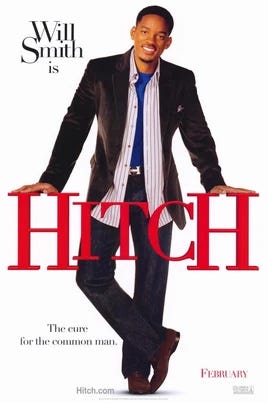
There’s a scene where Albert — earnest, awkward, and completely out of his depth — is on a double date. He asks Allegra’s best friend Maggie (Magnus), a creative professional, where his inspiration comes from. He answers simply: from everything around him. Life. Observation. Experience.
Albert pauses and replies:
“The receptive nature of creative facility just astounds me.”
It’s funny because it’s Albert trying very hard to sound like he belongs at the table.
But it’s also accidentally insightful.
Creativity isn’t just about output. It’s about receptivity. About noticing. About letting things in before trying to force something out.

That idea stuck with me, especially after reading Dan Brown’s The Secret of Secrets. Beneath the thriller scaffolding, the book plays with noetic science — the theory that consciousness might not be fully confined to the human brain. That it might be something we tune into rather than manufacture. You really should read it.
You don’t have to take that literally for it to be useful.
As a metaphor, it explains a lot.
Why ideas refuse to show up when scheduled.
Why they arrive in the gym, on walks, or at inconvenient hours when your brain should absolutely be offline.
Why burnout doesn’t just drain energy — it kills imagination by killing receptivity.
And that’s when another memory surfaced.
I grew up in the former Soviet Union, in a world quietly governed by grandmothers.
Russian babushkas are not just grandparents. They are the final bosses of folklore. Guardians of superstition. Half ancient Slavic paganism, half practical safety advice, wrapped in mysticism so children wouldn’t argue.
You didn’t debate a babushka. You complied and moved on.
One of the things they were absolutely certain about was this:
If you fall in a dream, it means you are growing.
As a child, this made perfect sense. Falling dreams were common. Growth was expected. You accepted the explanation and went back to your blintzes.
Here’s the problem - I still have falling dreams.
At this point in life, I’m pretty confident I am not growing physically. If anything, gravity and time are winning their long game. So the obvious question is: what exactly am I growing into?
Maybe the superstition wasn’t wrong — just incomplete.
Maybe falling in a dream was never about physical growth at all. Maybe it was about mental expansion. Perspective shifts. Identity lagging behind experience. The unsettling sensation of letting go of an old framework before the new one is ready.
Falling is what happens when reference points disappear.
Which, inconveniently, is exactly what growth often feels like.
We like to talk about growth as upward motion — climbing, leveling up, building. But a lot of meaningful growth starts as disorientation. As loss of footing. As a brief disconnect between who you were and who you’re becoming.
Babushkas, unintentionally, might have been onto something.
“You’re falling because you’re growing.”
Not comforting. Just honest.
And this is where the idea widens.
If consciousness, creativity, or even desire isn’t entirely self-generated — if we are at least partly receivers tuned into specific frequency — then there’s a responsibility that comes with that.
To build.
To create.
To contribute.
Societies don’t survive on consumption alone. They survive because people add something back into the system — ideas, structures, stories, continuity. When cultures only take, destroy, or forget, they don’t collapse immediately.
They hollow out first.
History doesn’t vanish overnight. It erodes.
And the uncomfortable truth is this: it may take millennia — or longer — to produce another brain capable of tuning into the same depth of information we currently take for granted.
There’s an interesting parallel here with artificial intelligence Long Language Models that’s hard to ignore. AI doesn’t “create” in a vacuum — it is trained by exposure, shaped by inputs, and refined through tuning. What it produces is entirely dependent on what it has been allowed to absorb, what signals it has learned to amplify, and what noise it has been taught to ignore. The model doesn’t invent meaning on its own; it reflects the patterns it has been given and the care with which it has been tuned. In that sense, human creativity isn’t all that different. We are trained by experience, tuned by attention, and shaped by what we choose to let in. If the inputs are shallow, destructive, or purely extractive, the output follows. But when we feed the system — human or artificial — with curiosity, context, history, and intention, something more coherent emerges. Not perfect. But meaningful.
Progress isn’t guaranteed.
Consciousness isn’t disposable.
Creativity isn’t infinite.
If we stop contributing, the signal doesn’t just weaken — it disappears.
Which makes dreams — sleeping or waking — feel less like private indulgences and more like invitations. Signals asking whether we’re willing to participate, to build something instead of just running through what already exists.
And maybe that’s why the falling dreams don’t stop.
Maybe they’re reminders.
Or recalibrations.
Or quiet nudges that something is still forming — even when it feels like nothing is stable yet.
So maybe the point isn’t to stop falling.
Maybe the point is to notice why you’re falling, and what you’re being asked to build on the way down.
We live in a time that’s very good at consumption and very bad at contribution. We optimize for speed, efficiency, and extraction. We run through ideas, through history, through people — assuming something else will always replace what we discard.
That assumption is fragile.
Civilizations don’t advance ensure because they consume more efficiently. They advance because enough people choose to add something back — thought, care, structure, memory. Because someone decides to build instead of strip, to create instead of repeat, to remember instead of erase.
That choice doesn’t require permission.
It doesn’t require certainty.
It doesn’t even require confidence.
It just requires participation.
If consciousness really is something we tune into — if creativity is something we receive as much as produce — then the responsibility isn’t to be brilliant. It’s to be available. To stay receptive. To leave something behind that didn’t exist before you touched it.
Maybe that’s what dreams are doing when they refuse to let us sleep peacefully.
Maybe that’s what falling is trying to teach.
Not that we’re losing control —
but that something new is asking us to take responsibility for it.
And if that’s true, then the quiet challenge is simple:
Don’t just run through the world.
Add something to it.
Even if your hands are still shaking from the fall.
Dmitry Gorbatov
© 2025 Dmitry Gorbatov | #dmitrywashere