

Normally I avoid sounding like marketing and directly promoting Everpure solutions. This time I am going to, and I would rather say that now instead of surprising you later.
What I write is how I learn. There is a saying I remember in Russian, «Кто пишет, тот дважды читает», which turns out to be Latin underneath.
Qui scribit, bis legit. Whoever writes, reads twice.
This is so true. Writing an article like this starts with pages of scribbled notes, research, reading a book that triggers a thought or inspires an idea. As I finish drafting an article, I read it again and again. I change things, research some more and type it again.
When my son was younger and I was helping him understand mathematical concepts, I also realized that as I explained things to him, I understood them better myself. He might disagree.
The reason I keep doing it here in this forum, in public, is that I meet many business leaders, and even technical architects, who are tasked with goals but lack the basic understanding of what all of these things mean. So as I am learning, I want to share in a language people can understand, and help them grasp the concepts they need to do their jobs well.
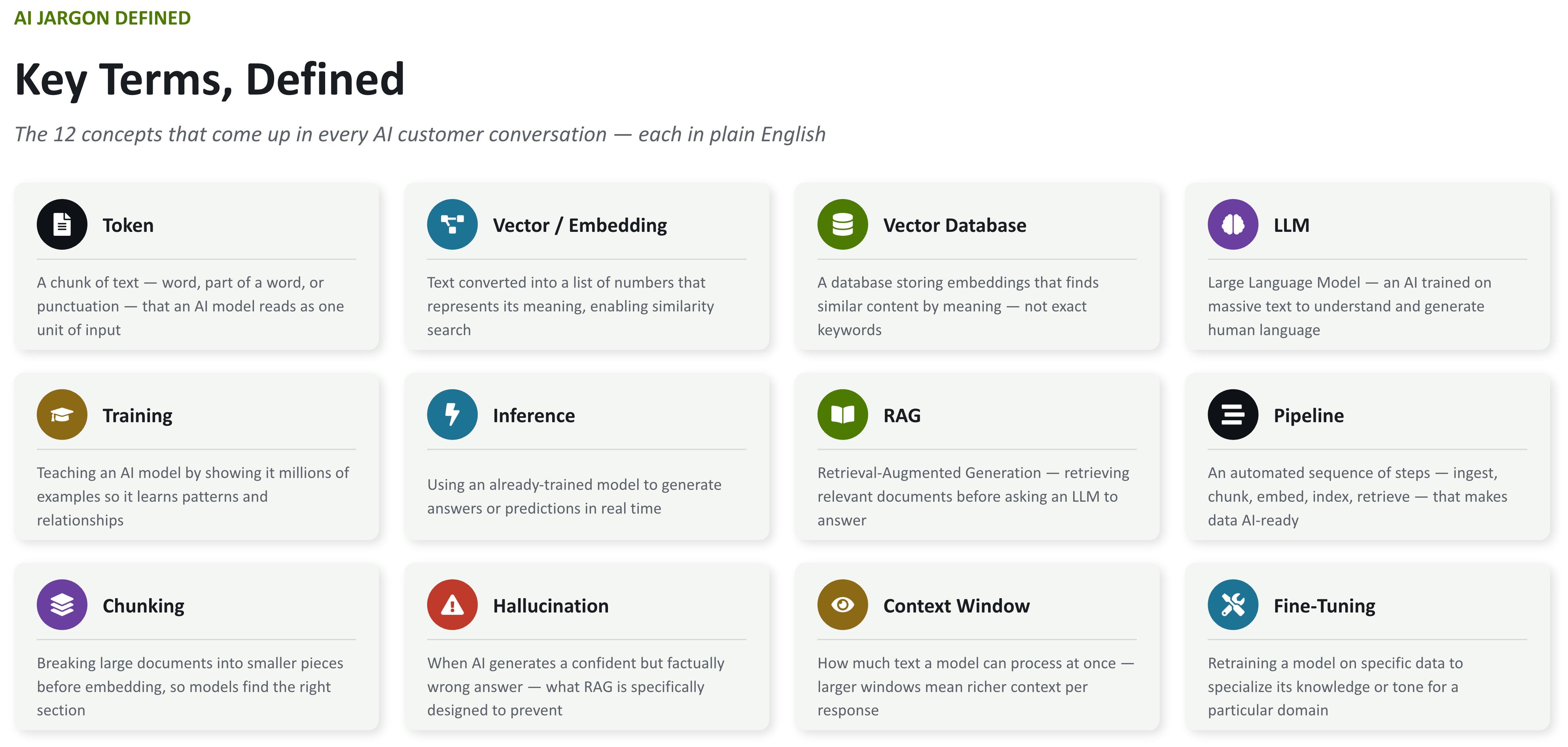
Last week I was in a meeting where the Everpure Data Intelligence topic came up. I asked everyone in the room if they knew and understood the basic terms used in AI conversations. I was grateful that instead of being quiet, many in the room raised their hands, made eye contact and admitted that they did not fully understand. We took some time and went over the basics to make the rest of the conversation relevant. People in the room were grateful and happy to learn. This is a big deal when you sell value. Active listening and a consultative approach.
Someone suggested I read Nick Bostrom’s Superintelligence. It was published in 2014. Reading the first few chapters and realizing the book was written before the current AI boom, I was impressed with some of his analysis and predictions. This is a very complex technical field, and being able to identify the challenges and potential approaches to solutions 12 years ago is very impressive to me.
Thinking about it, he wrote this book without ever typing a prompt into a chat window. No ChatGPT. No copilots. The most celebrated thing was a computer program that had beaten Garry Kasparov at chess, and IBM’s Watson beating Ken Jennings and Brad Rutter at Jeopardy.
One of the things he is saying is that it is not really AI, it is machine learning. I think this is very true from a technical perspective. We were able to build computers that are able to learn. In order for the machines to learn, they need to be taught. Enormous amounts of data need to be stored somewhere, and the speed of access has to be fast.
He never says the second part out loud. But I kept thinking it in my head as I read.
He picks up Alan Turing’s idea from the 1950s about building a child machine instead of an adult one, a program that “acquires most of its content by learning, rather than having it pre-programmed at the outset”, and notes that this applies whether you are copying a human brain or designing something synthetic.
Science fiction writers in the 20th century thought of artificial intelligence as humans building a machine that resembles a human brain. This is where the “copying a brain” expression comes from. Whole brain emulation involves slicing brain tissue, scanning it with electron microscopes, and reconstructing the network from the images.
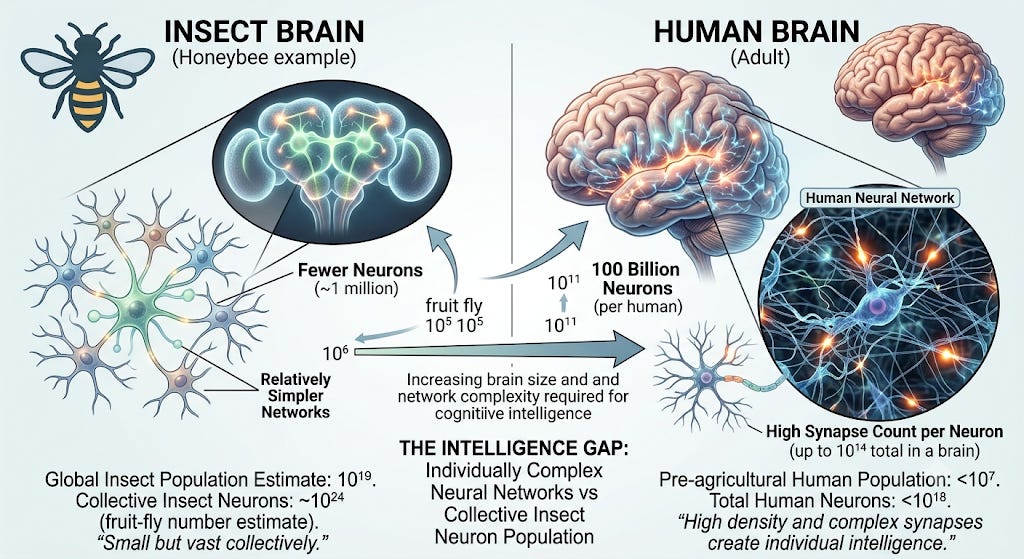
Bostrom is talking about what the machine does with what it learns. He says nothing about where the learning material sits, how it gets there, and who decided it was allowed to be there.
Once you notice that, it shows up everywhere in the book.
Later on he looks at it again from a different angle. He defines speed superintelligence as a mind that does what we do, only much faster, and gives the example of an emulation reading a book in just a few seconds. Then he follows the physics and concludes that fast minds needing constant interaction would want to live in machines in the same building, purely to avoid latency. That is data gravity, arrived at in 2014 by reasoning about imaginary digital brains. Dave McCrory had already named the idea in 2010, and I have written before about what it means when the model should travel to the data. Bostrom hit the same wall from the other side and does not seem to have noticed he had found something practical.
Reading Chapter 4, I decided to write this post.
Is it just me, or does this happen to you too? I read something and my mind starts wandering. I find myself skipping entire paragraphs and needing to focus and read them again.
I had to put the book down. Some of the terms he uses I did not even understand, so I kept looking them up. If you are just trying to fall asleep, it takes its toll.
He frames the whole question as a ratio.
Rate of change in intelligence equals optimization power divided by recalcitrance.
His word, not mine. I had to look it up too.
Recalcitrance is his word for how much the system resists being improved. Lower the resistance and the same effort gets better results. So he goes looking for places where the resistance might already be low, and he lands on what he calls a content overhang: “pre-made content (e.g. the internet)” sitting there, becoming available to a system the moment it reaches human parity.
He wrote that as a hypothetical. We ran the experiment. The overhang was real, the models consumed it, and the results were good enough that every organization now wants the same trick performed on data that is not on the internet.
That is where the book stops being prophecy and becomes useful. The public internet came pre-cleaned because somebody decided to publish it. An organization’s data has no such property. Nobody curated the shared drive, nobody labeled the PDFs, and there was no editorial decision behind the fourth copy of the enrollment spreadsheet.
What Machine Learning Actually Unpacks Into
In practice there are six stages. This is the vocabulary part, so I am going to be slow about it. The image below does not match this list exactly. I used this image to explain basic concepts to my team a few weeks back.
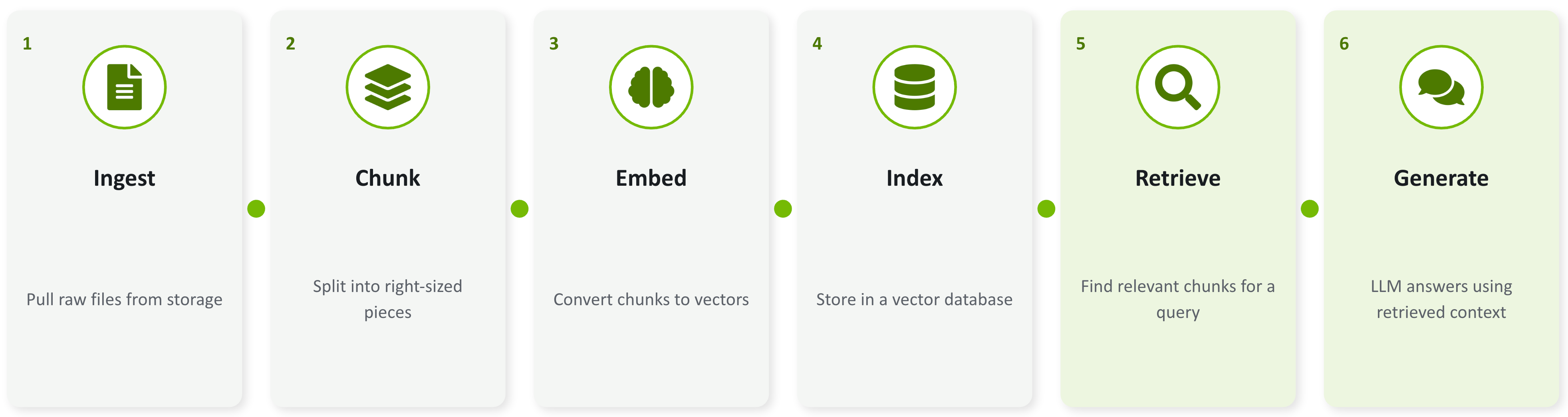
Ingestion is first, and it is not as easy as it sounds. The unstructured data, PDFs and images and objects and streams, has to move at multiple gigabytes per second or the pipeline develops backpressure and the results may suffer. Just like plumbing.
Then curation, which means cleaning, deduplicating, normalizing, and ignoring corrupt files nobody has touched in years. And I am talking about doing this across millions of objects. Then classification, where data gets scanned and tagged for what it actually contains: personally identifiable information, intellectual property, the things with risk or legal consequences.
That third stage is the one I would underline for anyone in state or local government, or in higher education.
Classification has to happen before embedding, not after.
Once a chunk of text becomes a vector in an index, you cannot attach a sensitivity label. The label does not come along unless somebody deliberately carried it there. You cannot un-embed someone’s social security number. This is why I keep writing about knowing what your data is before you point a model at it and about discovery and classification as a prerequisite rather than a checkbox.
The last three stages are like geometry.

Embedding runs text through a model that turns concepts into a bunch of floating-point numbers, which is how “refund” ends up sitting near “billing” and “invoice” in a space with a few thousand dimensions.

Indexing writes those vectors into a structure so that finding the closest ones stops being a linear scan of everything and becomes a logarithmic walk. Remember, it is all about statistical probability.
Retrieval measures distance, pulls the closest chunks, and combines them into the prompt before the model sees the question. That last step is Retrieval-Augmented Generation, or RAG, and it is how you can give a model the latest data without doing yet another retraining run.
Six stages, compressed into the word “learning” in the book, which was a completely reasonable thing to do in 2014 when the open question was whether any of it would work at all.
The Machine on the Other End Is Extremely Parallel
Let me geek out and get into the weeds a little. Ask yourself a question. All that “learning” data, where is it going, and what is it feeding?
A CPU has a handful of powerful cores optimized for doing one thing after another quickly.
Back in 1999 NVIDIA introduced the first GPU for video gaming, the GeForce 256. In 2006 NVIDIA introduced CUDA, expanding the GPU from a graphics-only tool into a powerful general-purpose parallel processor used for science and machine learning. When the book was written, GPUs were already available.
A modern GPU has thousands of small cores, plus tensor cores built for one operation: multiply matrix A by matrix B, add C, in reduced precision, constantly. CUDA is the layer that lets the ordinary C++ programming language address that hardware, organizing work into grids, blocks, and warps of thirty-two threads running the same instruction across different sets of data. PyTorch and TensorFlow sit on CUDA. NVIDIA’s NIMs (NVIDIA Inference Microservices) sit on top of that, packaging weights and an optimized runtime into a container you deploy behind an API instead of assembling by hand.
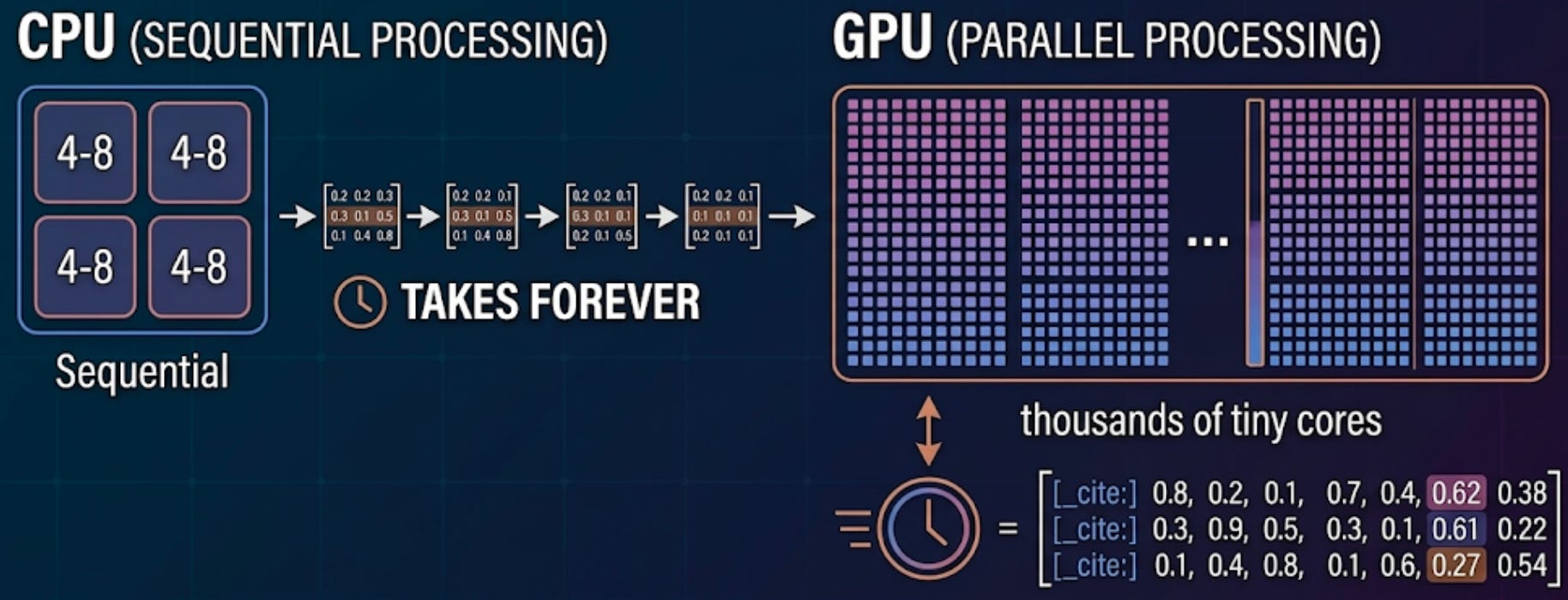
Every layer of that stack exists to do enormous numbers of things at the same time. What feeds it is frequently a legacy storage platform initially designed for running a database doing sequential reads for a small number of users.
That is what AI engineers call GPU starvation. Not a shortage of accelerators, a shortage of anything able to keep them busy. I wrote earlier this year about how power became the constraint everything else organizes around, and the worst version of it is a GPU still drawing full power, producing full heat, occupying rack space, and converting none of that into work.
Somebody Figured This Out Before the Boom Too
In 2018, four years after Bostrom published and four years before ChatGPT, Pure Storage and NVIDIA shipped a joint reference architecture called AIRI. DGX compute nodes connected to first-generation FlashBlade over Arista or Mellanox RDMA network fabrics. The premise was that legacy arrays choke when hundreds of parallel cores demand small, random IO, and that storage therefore has to scale bandwidth and IOPS linearly alongside compute or the investment is wasted.

I remember taking a training back in 2018 and thinking to myself: “Who would ever need this AI stuff?” Nobody outside a fairly small group of really smart people was thinking about AI in 2018.
As time went on, the idea got more specific. FlashBlade//S and //EXA scale capacity, processing, cache, and network throughput together with every blade added, with the design goal of keeping accelerators fed and busy. Everpure Data Intelligence, from the 1touch.io acquisition, handles discovery and classification across hybrid environments and enforces policy before anything gets vectorized. Everpure Data Stream, co-engineered with NVIDIA, automates the run from ingestion through curation to vectorization, so data scientists stop spending two to four months manually building a pipeline before a model reads its first document.
I would strongly suggest you read any vendor’s throughput and utilization numbers, including ours, with the skepticism they deserve. The direction of the architecture is the part I think holds up.
Bostrom’s ratio concept is still useful today. Optimization power is available on a credit card and your competitors have the same card. Recalcitrance is where the difference lives, and in a state agency or a research university, recalcitrance is not the model. It is twenty years of data across file shares, mainframes, databases, SaaS applications, ticketing systems, and backups nobody has opened since the last migration, with no reliable way to say which of the copies is current or which one contains something that should never have left the building.
The data has to live somewhere. Somebody has to know what is in it. Somebody has to get it to the machine fast enough for it to matter, and that turns out to be most of the job.
Appreciate you reading.
Dmitry Gorbatov
© 2026 Dmitry Gorbatov | #dmitrywashere
Great read thank you! I am interested to see what will outperform NVIDIAs CUDA raw computing throughput. Perhaps AMD or Apple Silicon leaps ahead someday!