

I want to take a break from only writing about technology for at least this weekend.
Earlier this week I was in Chicago. My hotel was just over half a mile from the office and over 3 days I walked down Monroe Street downtown a dozen times. The weather was nice, the heat wave finally broke. The smoke from the wildfires cleared.
One thing bothered me this whole time - people walking to and from work, making deliveries, getting lunch or coffee. And almost all of them had their phones in their hands. No, I didn’t see any accidents, nothing like that. And I am not making fun of anyone.
I simply started thinking about how things were different in the past. If you asked me thirty years ago what it took to succeed in selling, supporting and delivering advanced technology, I would have given you a predictable list. Know your stuff cold. Prepare better than anyone else in the room. Stay disciplined. Work harder than the engineer sitting next to you.
All this is still true today, but this is not everything.
The experiences that actually stayed with me, the ones that quietly reshaped how I show up in front of people, had almost nothing to do with technology. They came from conference rooms where people were allowed to smoke, long flights across time zones, long silences, dinners where I understood perhaps every fourth word, and customers who taught me that my personal definition of “professional” was only one version of the story.
My world back then was delightfully simple. I believed, as many engineers do, that competence was mostly a matter of information. If you knew the systems inside out and came into the room with enough material, everything else would fall into place.
Then I got to Japan.
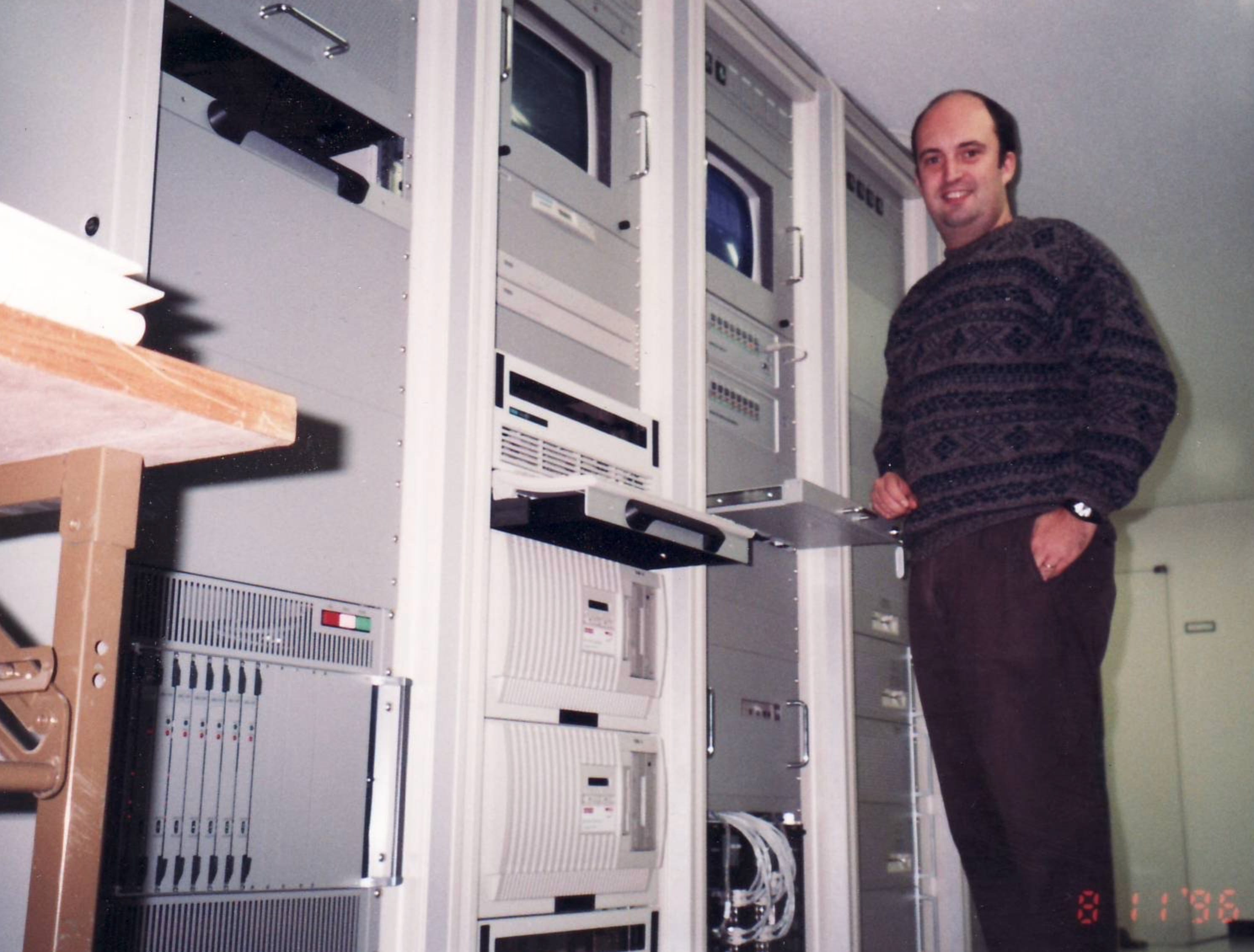
Don’t laugh, back then I did have some hair and when I called the support center at the home office, the first question always was: “Do you have holes in your socks?” See, in Japan, you take your shoes off before entering any room. Even if it is just a data center. And if you are still looking at the photo, yes, these are the DEC Alpha servers under the KVM.
It was the mid-1990s, 1996 to be exact. We were introducing a new SMS messaging platform to a major customer in Fukuoka. For the younger readers here, SMS was the beginning of text messaging.
I had spent days preparing for the product validation meeting, building what I considered an exceptional test plan. It lived in a crisp three-ring binder, neatly formatted, printed on an OKI dot-matrix printer, beautifully organized, running somewhere around forty pages. I remember walking into that conference room feeling proud of the work.
The customer received it gracefully. We were in Japan after all. They thanked me, spent a few minutes flipping through the pages, smiled politely, and said something that still makes me smile decades later.
“This is not a test plan.”
A few moments later, they brought out their version and placed seven heavy volumes on the conference table.
Together, those binders probably exceeded the shipping weight of my checked luggage on an Air France flight from Paris to Tokyo.
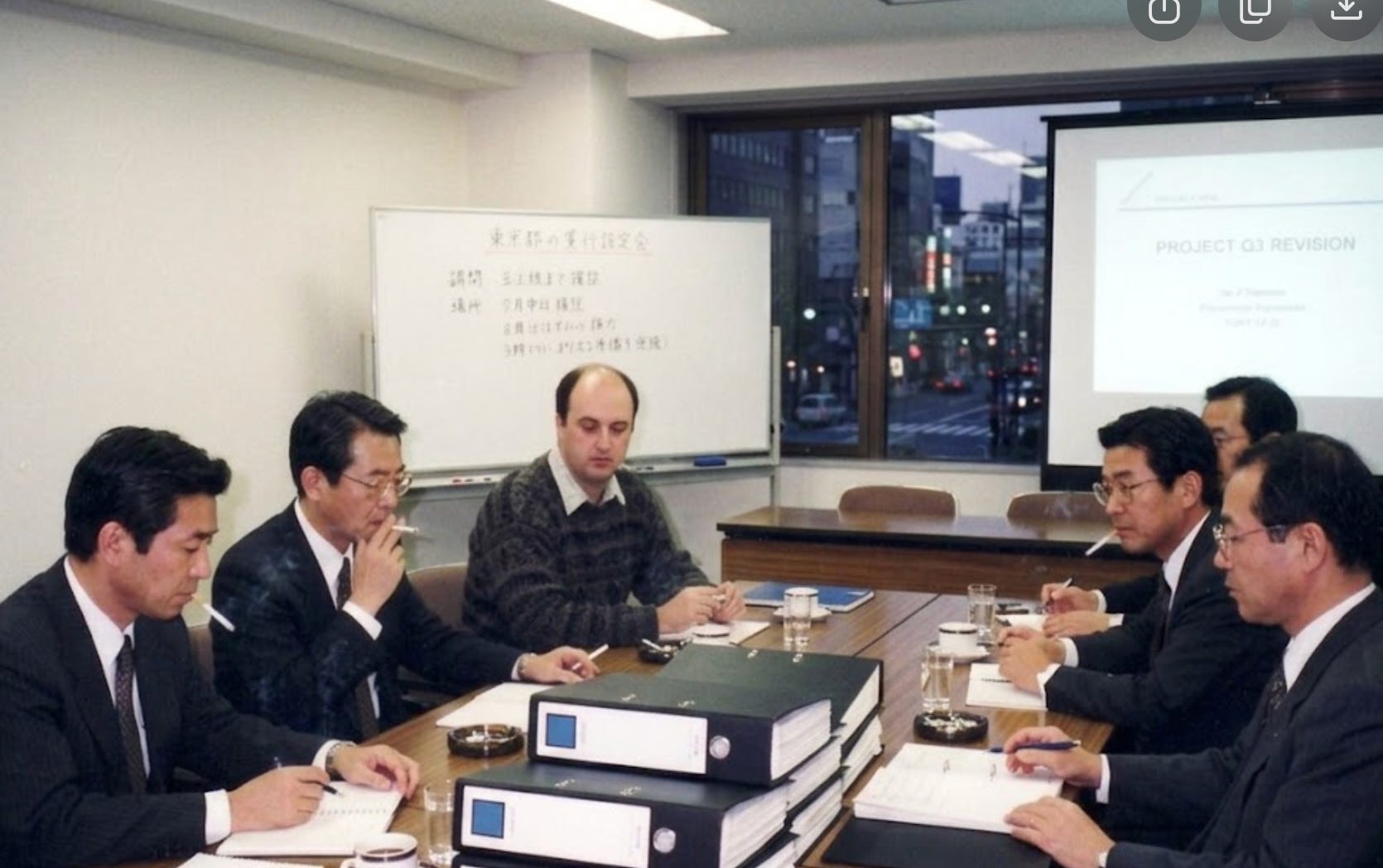
Sitting there, watching those seven massive binders, I had a choice. I could get defensive. I could explain that nobody in our industry writes test plans like theirs, or tell myself they were creating unnecessary bureaucracy just to make life difficult.
Instead, a little internal voice said, “Slow down.”
I have no clear idea where that impulse came from. This was my first ever trip to Asia. We didn’t have internet to research the culture and how to behave properly. I had a laptop with a dial-up modem and Lotus 1-2-3 Smart Suite for email.
Maybe it was basic respect, or maybe I just realized that arguing with a customer about methodology before understanding their world was a terrible strategy. So I kept quiet and listened.
Over the next few days and nights, I learned what those thousands of pages actually represented. They were not about bureaucracy for the sake of it. They reflected a culture where trust was earned through discipline, repetition, and an almost religious attention to detail. Their expectations were different because in their world, the consequences of a mistake were measured on an entirely different scale. There is nothing worse in Japan than 'losing face'. They tested normal operations, failover scenarios, power loss. Do you know how they tested if the system would survive an earthquake? They just hit the hard drives with a mallet.
When I finally got back and shared the experience, we did not start writing two-thousand-page binders for every account after that, but we did start asking radically better questions.
I must admit, Japanese customers improved the quality of our solutions. By a wide margin.
A few years later I found myself in Thailand, sitting across from the owner of one of Thailand’s largest telecommunications companies (AIS) and a prominent businessman who would later become Prime Minister, Thaksin Shinawatra.
Nothing about that meeting felt like Fukuoka. The rhythm was very different. The way people spoke, the way decisions were weighed, and the subtle ways disagreements were expressed shared no common ground with the conference room in Japan.
Singapore was something else entirely. If Japan taught me patience, Singapore was a masterclass in efficiency. People arrived fully prepared, got straight to the point, and expected you to do the same without fluff. Vietnam had its own distinct cadence. Australia had another.
The strange thing was that the underlying technology barely changed from country to country. The architecture was almost identical. We were still sending and receiving text messages. The products were the exact same boxes. Well, we did upgrade from Informix DB to Oracle 9i on UNIX and were now using DEC AlphaStation 600s. Yet the very same technical explanation could land as deeply reassuring in one room and completely tone-deaf in another.
Eventually, I stopped trying to force people into my framework. I became curious instead. Why did that specific detail trigger concern? Why did this metric matter so much to them, while another team ignored it completely? What was the actual pressure they were under when the conference room doors closed?
That curiosity turned out to be far more useful than any technical certification I ever completed.
It also changed how I view relationships back home, including the long stretches I spent working with government organizations in the United States. We often repeat the phrase “trusted advisor” as if it were a title you unlock after delivering three good projects in a row. We assume trust accumulates like interest in a bank account and just sits there waiting for us.
In my experience, trust does not work like that at all. It has to be re-earned, mostly because people do not stay static.
The customer who bought a solution from you five years ago is rarely the same customer today. Their title might be the same, but their world has changed. They might now be worried about cybersecurity threats, AI, or drastic funding realignments. The young architect who loved diving deep into low-level metrics might now be a director managing organizational politics and digital transformation.
When vendors lose accounts, they often blame the product, the pricing, or an aggressive new startup. But more often than not, the failure is much simpler: the vendor kept selling to the customer as they remembered them, rather than the customer standing in front of them right now. They stopped paying attention. They relied on old familiarity instead of current curiosity.
Real partnership rarely shows up on a QBR deck or a tracking dashboard. You cannot easily measure the business value of staying on a late-night bridge call for three extra hours when you already know your own software is running perfectly, just so the customer does not have to troubleshoot the networking issue by themselves. Nobody logs a line item for answering a weekend call when a customer is panicking about an outage that has nothing to do with your solution.
Those moments are where actual trust is built. They remember who stayed in the room when things got ugly.
Thirty years after that trip to Japan, I don’t remember the exact model numbers of the systems we were validating, nor do I remember the specific test cases in those massive volumes. But I remember the shift that took place in my head when those seven binders were put onto the table.
Respect comes long before influence. Curiosity comes long before credibility. And becoming a trusted partner is not about having all the right answers lined up in advance — it is about never losing the desire to understand what matters to the person sitting across the table today.
Appreciate you reading.
Dmitry Gorbatov
© 2025 Dmitry Gorbatov | #dmitrywashere