

Most data storage vendors use value added resellers (VARs) to scale their business. It makes sense - more sellers out there can meet more customers and prospects and deliver the value message. In an ideal world, the purchasing decision should be made based on merit, right?
Assuming that the buyers are completely rational and logical, they should evaluate a proposed solution based on three things: superior product capabilities, tangible return on investment (ROI) and operational advantages. In this scenario, buyers evaluate the evidence and make their purchasing decisions. Wouldn’t that be nice? It would, indeed.
The reality is very different. Last week one of the sellers at a VAR we do a lot of business with was sitting in an enablement session delivered by our competitor. There is no need to name names here. This is not the point. I have a lot of healthy respect for all of our competitors. They know who they are. And I hope they read this. This seller has been around for a long time and the message shown on one of the slides was so odd that he took a picture of it and texted it to me.
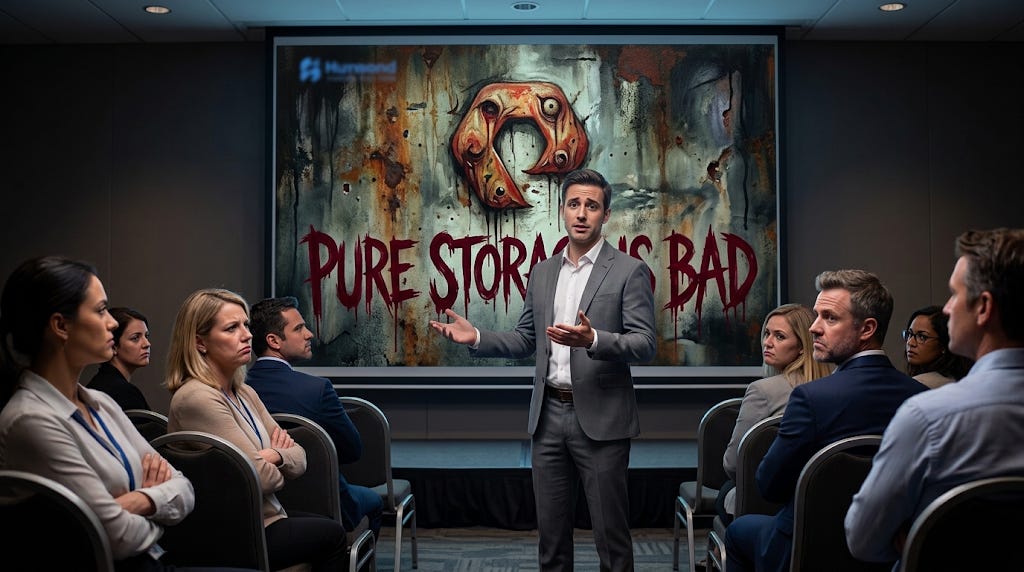
I am not in a position to tell our competitor how to conduct their business. If that is what they choose to do, more power to them. What bothered me the most is that this particular slide has been used for almost ten years to tell everyone who would listen that our solutions are inferior, unreliable and definitely not enterprise-ready. If you want to bash our solutions, maybe update your scare narrative?
Here is the real issue - a customer meeting is one event, one conversation. An enablement session is where a vendor teaches dozens of sellers and solution architects what to say in meetings with customers. So this slide doesn’t stay in one room; it gets repeated in many meetings.
The question I ask myself is WHY? Why do they have to do this? According to him, that vendor spent over ninety minutes talking about Everpure (formerly Pure Storage). Ninety minutes! Instead of showing the value of their own solutions.
I wanted to know whether this was just my personal view or whether there was something more to it, so I did some research. I was especially interested in the evolutionary side, because a tactic that survives this long, in every industry, usually survives for a reason.
Apparently there is a large body of evidence showing that negative messages and events hit us humans harder and stay in our memories longer than positive ones. Think about it - if our ancestors missed a tree full of fruit and went hungry, they would have one bad day. But if they missed a wild predator, they would not have any days left at all.
Randolph Nesse, an evolutionary psychiatrist, called it “the smoke detector principle.”
When a false negative is fatal and a false positive only costs a bit of energy, natural selection sets the alarm to go off at the smallest hint of smoke. So we get a lot of false alarms, and we are built to accept that.
We as humans apply brakes (virtual ones, of course) in our brains when we are scared. This is the reflex FUD (fear, uncertainty and doubt) is designed to trigger. Again, from an evolutionary perspective, negative messages get more attention and are remembered longer than the good old value proposition.
Whether this works depends on who is attacking whom. When a small challenger (like a startup) attacks the leader, they often gain, because naming the leader puts them in the same conversation and implies they are viable. But when a larger competitor is attacking a smaller rival, they usually lose, because it gives the rival free validation and makes the attacker look nervous.
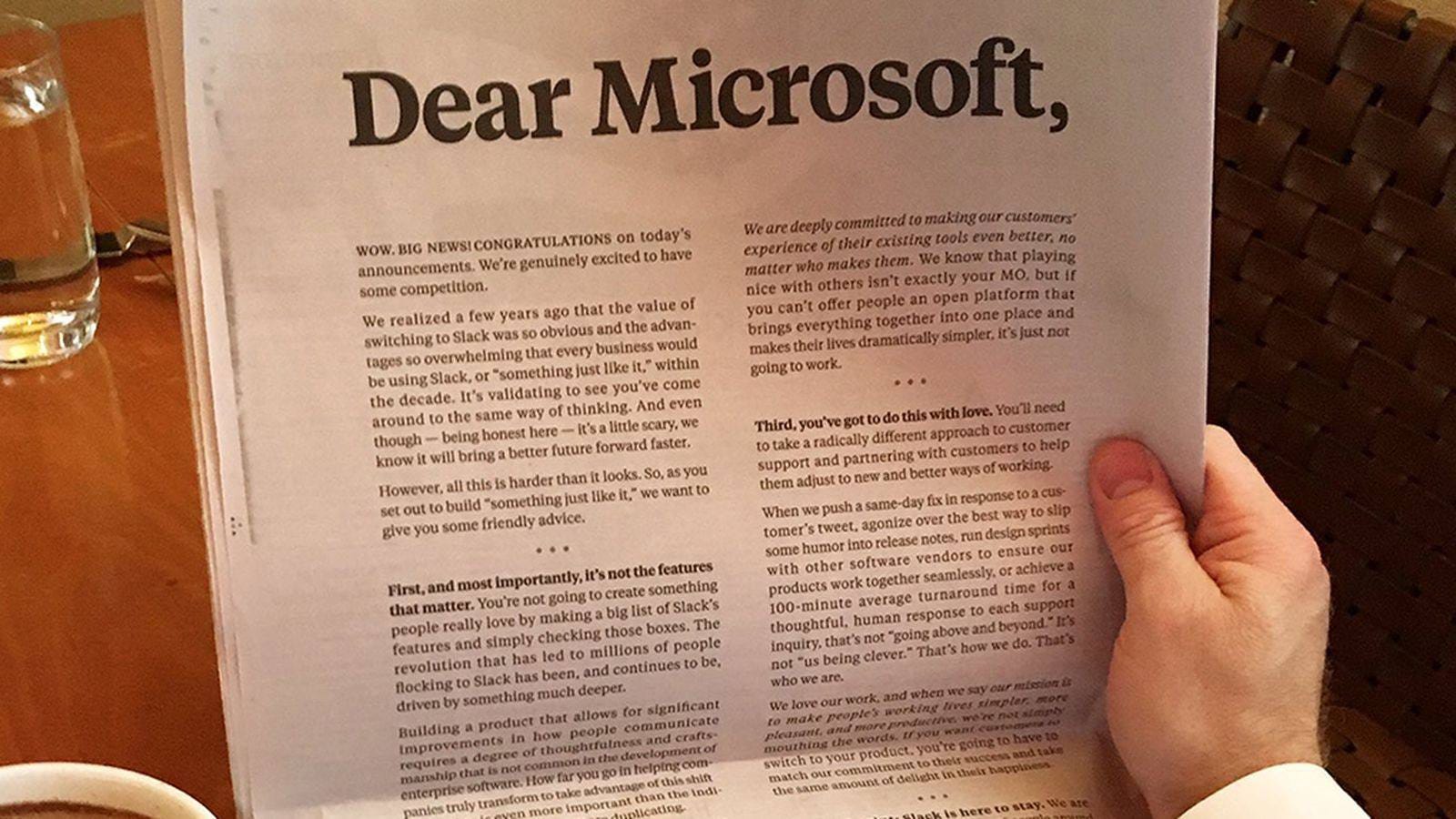
Remember the story when Slack published an open letter to Microsoft in The New York Times the day Microsoft Teams was announced? Many CIOs learned about Teams that day from Slack’s own full-page ad.
Personally, I don’t take the Gartner Magic Quadrant as gospel. Still, being recognized as a Leader in enterprise storage for so many years in a row should speak for itself. It is one external data point that a CIO’s smoke detector can actually use, and it is hard to square with a slide claiming that the same company isn’t enterprise-ready. You can argue about any single year. It’s much harder to argue with a decade of them.
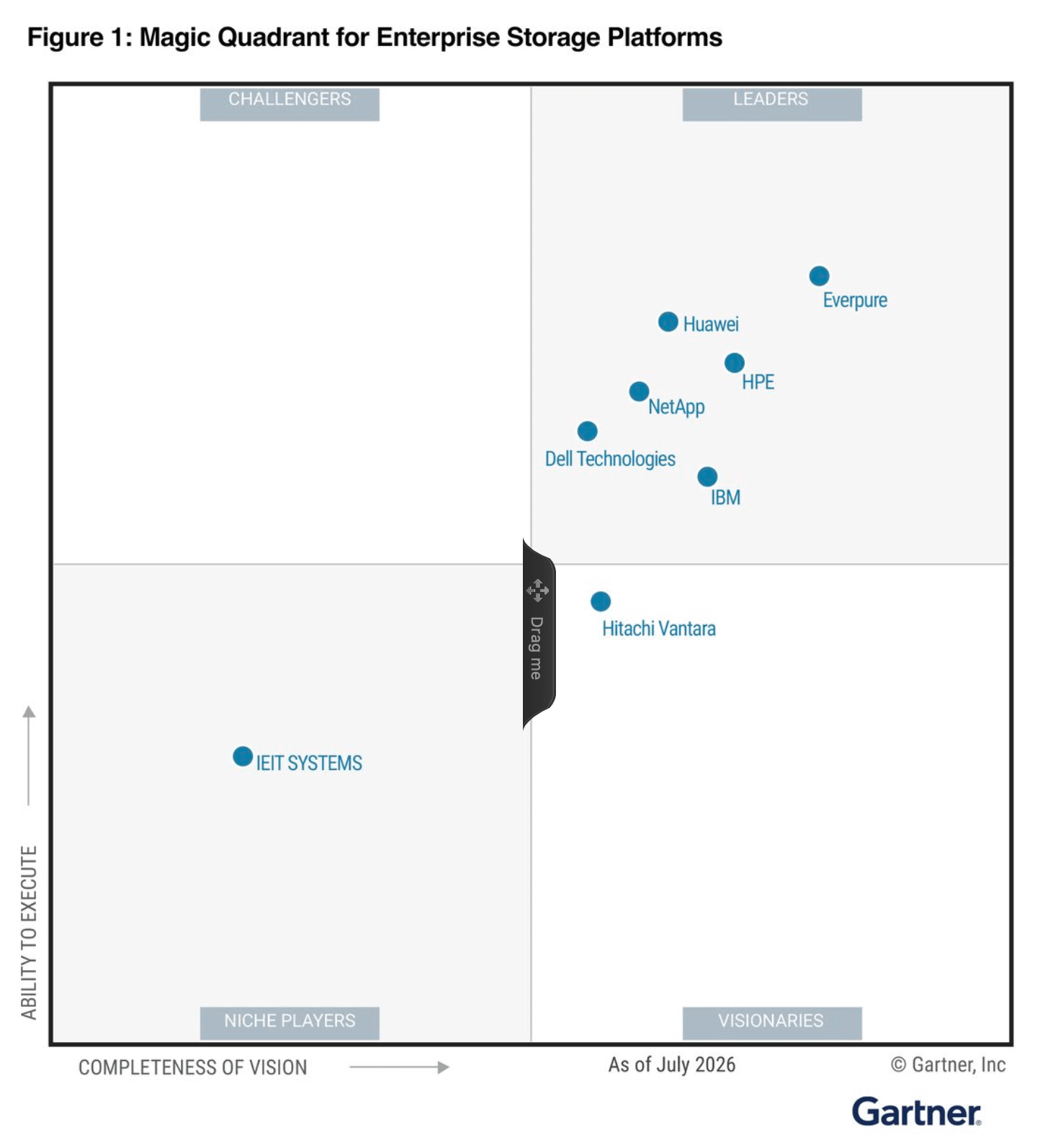
Ten or fifteen years is a really long time in the data storage industry. During the last fifteen years I worked for two major storage vendors and an aspiring storage startup.
In the last ten years, here at Everpure, we went through several hardware generations, the industry moved from arguing about whether flash was ready for the enterprise to asking why anyone still buys spinning disk for primary workloads, and a whole generation of storage administrators changed jobs, changed titles, or moved to cloud teams or, more recently, AI teams. Through all of that the slide stayed the same. It’s rich to use a slide that wasn’t updated in ten years to call us outdated.
I strongly believe, and I know it is probably idealistic, that decisions should be made on the merit of the solution and not on FUD about competitors. My reasons are partly ethical and partly practical. On the practical side, bashing the competition has a side effect that the people building these slides don’t seem to consider. The prospect may not even have been thinking about that competitor. Then somebody spends time in a meeting explaining why that vendor is dangerous, and now the prospect is curious and will go and look at them. You have just added a name to their shortlist for free. The second effect is harder to measure but maybe more important. When a company spends so much of its pitch talking about someone else, it tells me that it is afraid of the competition and doesn’t have enough good things to say about its own solution. If your product is strong, why would you spend your time with a customer on mine?
Now I understand better why a slide can stay in a deck for ten years without anyone feeling the need to update it. It was never written to be accurate. It was written to set off a smoke detector, and smoke detectors don’t check the date.
I appreciate you reading.
Dmitry Gorbatov
© 2025 Dmitry Gorbatov | #dmitrywashere