

In Part 1, I tried to give MCP a proper “…splanation,” mostly because the first several times I heard people talking about Model Context Protocol, I had the same look Joey had in Friends when the salesman asked him if his friends ever had a conversation and he just nodded along without really knowing what they were talking about.
That was me.
MCP this. MCP server that. Agentic AI. Tool calling. Context windows. Protocols. Hosts. Clients. Servers. At some point, I realized I was nodding with the confidence of a man who had understood approximately 41% of the conversation and was hoping nobody asked a follow-up question.
The simple version is this: MCP is a standard way for AI applications to connect to tools and data. It is not the AI model itself. It is not the magic brain. It is the plumbing that lets the AI reach into approved systems, ask better questions, retrieve useful context, and potentially take action through well-defined tools.
That is important in the abstract.
But for Everpure customers and prospects, it becomes much more interesting when we stop talking about MCP as a general AI concept and start talking about what it could mean for storage operations, data infrastructure, and Everpure Fusion.
Because this is where the conversation moves from “AI is coming someday” to “your infrastructure may already need to be ready for how AI will interact with it.”
Everpure recently published a blog with a sneak peek of the Everpure Fusion MCP Server, describing it as an open-source service that connects AI assistants to Everpure Fusion storage fleets through the Model Context Protocol. The important part is not simply that an AI assistant can talk to storage. That would be interesting, but it would also be easy to misunderstand. The important part is that the assistant can interact with the storage environment through the Fusion control plane, which already understands fleet-wide context across FlashArray and FlashBlade.
That distinction matters.
Without Fusion, many environments are still managed in a way that looks very familiar to anyone who has spent time supporting infrastructure. One array over here. Another array over there. Scripts in one folder. Notes in another. Naming standards that started strong and then apparently met reality. Screenshots in tickets. Tribal knowledge in the heads of a few people who somehow remember which workload lives where, which array is doing what, and why nobody should touch that one volume because “there was a reason,” even if nobody is entirely sure what the reason was anymore.
That model may work, but it does not scale gracefully. More importantly, it is not especially friendly to automation, and it is definitely not ideal for AI-assisted operations.
Most troubleshooting in mature environments is not hard because people lack tools. It is hard because the context is not immediately obvious.
The storage admin has one view. The DBA has another view. The virtualization team has another view. The application owner has a completely different view, usually delivered through a ticket that says something deeply scientific like “the app feels slow.” Everyone may be looking at a valid piece of the puzzle, but the real work is in the correlation.
Which volume maps to which workload? Which array is hosting it? What did latency look like during the reported window? Were IOPS elevated? Was bandwidth constrained? Did anything change recently? Are we looking at a storage issue, a database issue, an application issue, a noisy neighbor, a misconfigured VM, a bad query, or just another case of “the network is innocent until proven guilty, but still somehow looks suspicious standing there”?
That is where Fusion and MCP together become compelling.
The Everpure Fusion MCP example makes the idea real. Instead of forcing an administrator to manually build low-level REST API calls or jump between tools, the MCP-aware AI assistant can query Fusion through higher-level tools exposed by the MCP server. In the example Everpure blog described, a storage admin can ask about workloads and volumes supporting a production SQL environment, including arrays, IOPS, latency, and bandwidth over a recent time window. The assistant can then correlate that storage perspective with information from another MCP server, such as SQL Server context around database files, wait types, and query behavior.
That does not mean the AI replaces the storage admin. It does not mean the AI replaces the DBA. It does not mean everyone goes to lunch while the robot fixes production.
And this is where I need to bring in The Big Bang Theory again, because apparently this is who I am now.
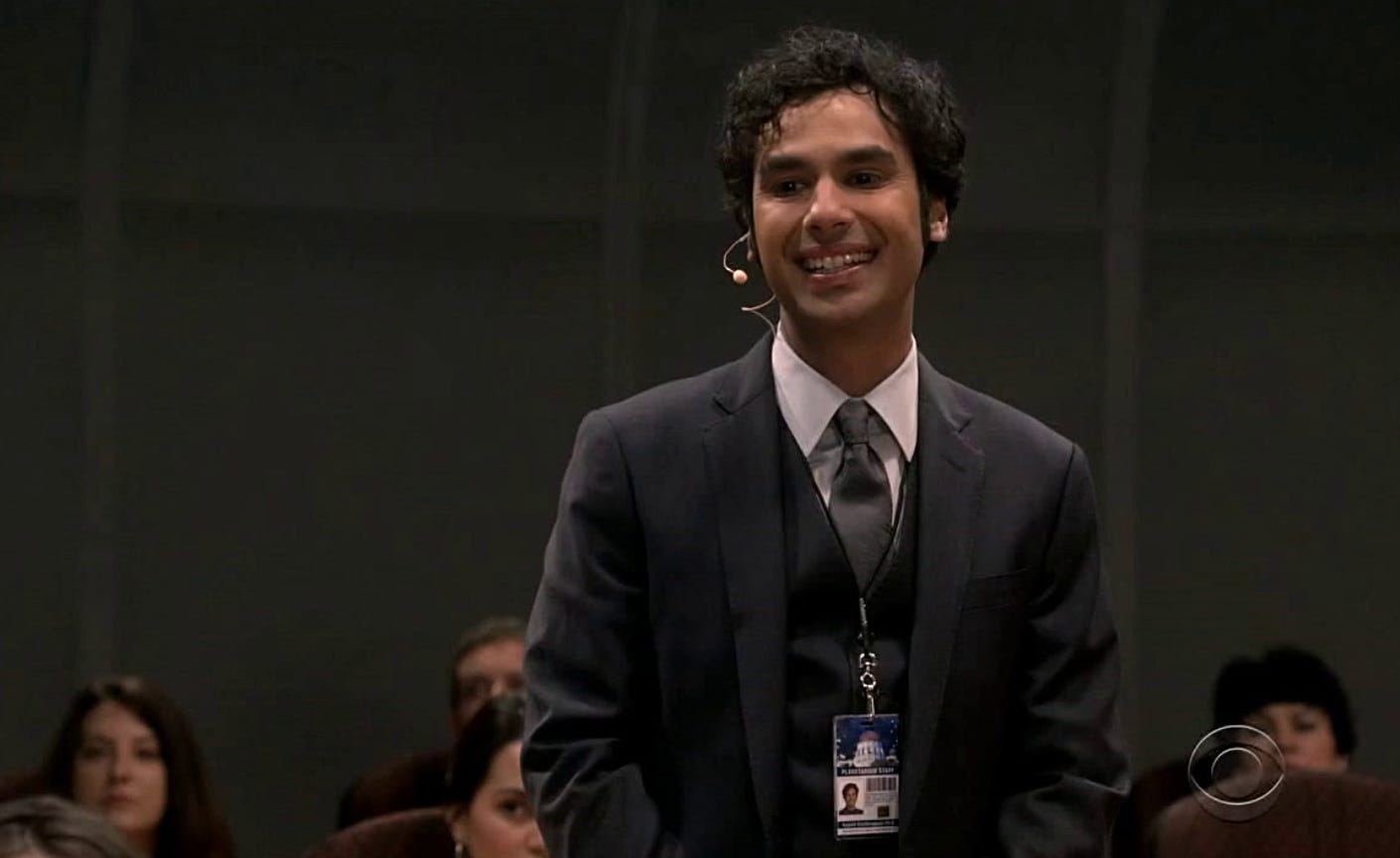
There is a scene in the show where Raj is very open to the idea of aliens and extraterrestrial life. At the planetarium, Raj can look at flashes of light in the sky and talk about how scientists cannot fully rule out the possibility of alien civilizations. It is funny because Raj is a scientist, but he is also Raj, so the line between rigorous possibility and “maybe the aliens are waving at us” gets wonderfully blurry.
That is how some people talk about AI operations right now.
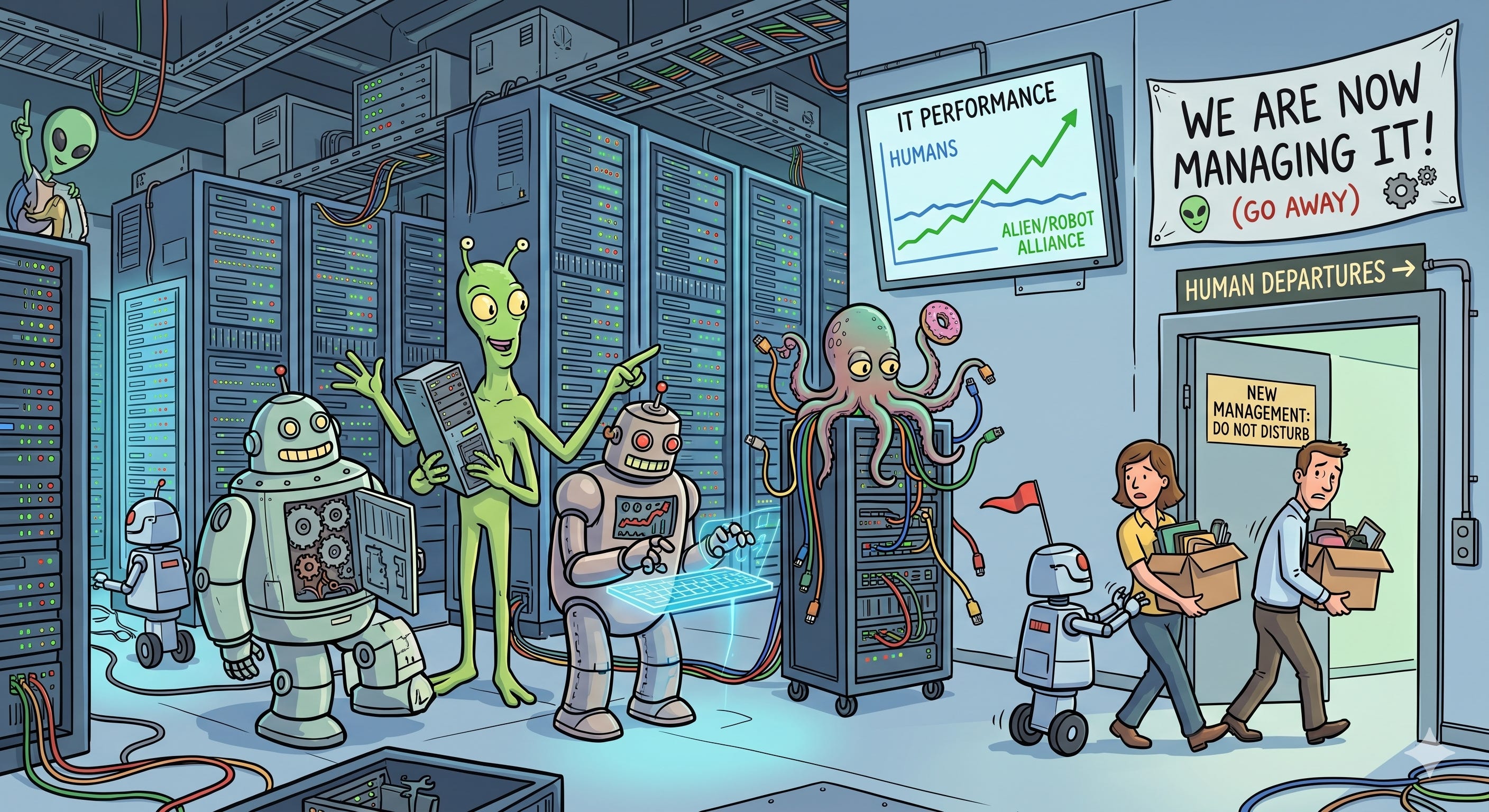
A light flashes in the sky, and suddenly someone is ready to announce that the robots are here to run the data center.
Let’s not do that.
The point is not that the AI is an alien civilization arriving to take over infrastructure operations. The point is that the interface is changing. The way humans interact with infrastructure is starting to move from manual lookup, command execution, and tribal knowledge toward assisted reasoning, guided action, and cross-system correlation.
That is much more practical than aliens.
It is also much more useful.
Fusion already gives customers a fleet-wide control plane. It gives you the ability to think above individual arrays, above one-off configuration, and above the old habit of managing infrastructure like every system is its own little island with its own weather pattern. MCP gives that control plane another interface, one designed for the way AI agents work.
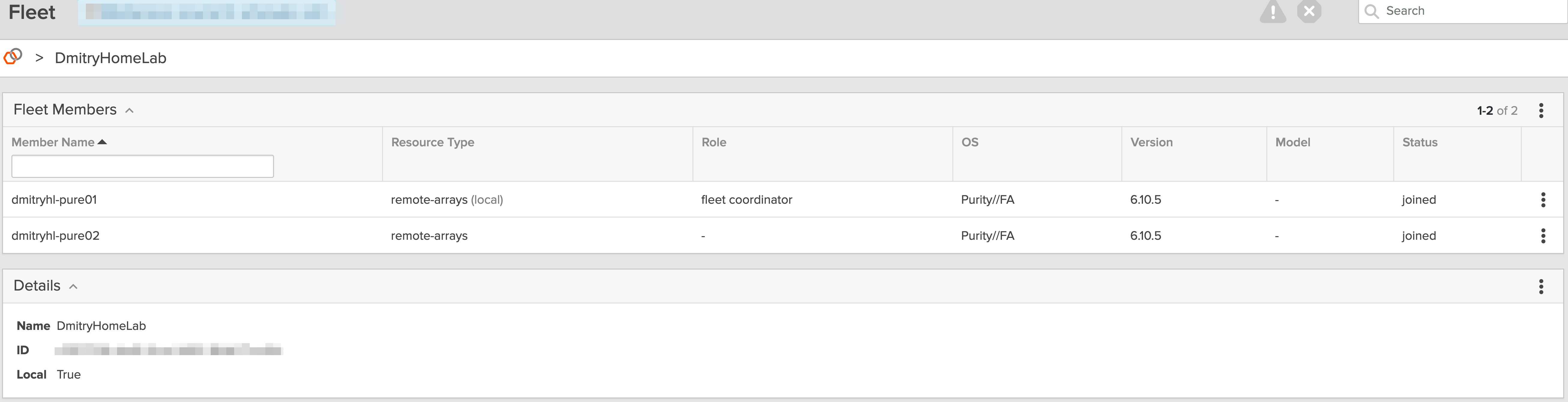
This is why Fusion adoption matters.
If your environment is still managed mostly array by array, script by script, ticket by ticket, and screenshot by screenshot, then AI can only help so much. It may summarize the pain beautifully, but it is still summarizing pain. When you use Fusion to create a more consistent, policy-driven, fleet-aware operating model, you are not just modernizing storage management. You are making the environment more understandable to automation, to operations teams, and now to AI agents that need structured context in order to be useful.
That is a very different conversation from “look, the AI can query storage.”
The better conversation is this: if AI is going to become part of operational workflows, then your infrastructure needs to be ready to participate in those workflows. Fusion is one of the ways you prepare for that.
Not someday.
Now.
And Fusion is not the only example of this direction. Another Everpure technical article shows how an MCP server can be built to integrate with FlashBlade, allowing an AI assistant to query system data and even take direct actions through a natural-language interface. That example is useful because it shows the bridge between the old world and the new one. In the old world, storage management often meant CLI commands, scripts, API calls, screenshots, and specialized knowledge living in the heads of a few very tired people. In the new world, those capabilities can be surfaced through an AI-assisted experience that understands the available tools and can help operators ask better questions in plain English.
Again, that does not mean the AI should blindly run your infrastructure while everyone disappears. Please do not read this article and tell your change advisory board that “the blog guy said the robot can handle it.” That is not the point, and I would like to remain welcome in polite infrastructure society.
The point is that the operational model is changing.
For years, we have talked about automation in infrastructure, but a lot of what we called automation still required a human to know exactly what to automate, where to look, which command to run, which script was safe, which API endpoint mattered, and which piece of documentation had not quietly aged into fiction. AI-assisted operations changes the interaction pattern. Instead of always beginning with the operator knowing the exact command or API call, the operator can begin with the question.
Why did this workload slow down?
Which volumes support this application?
What changed in the last four hours?
Which arrays are carrying the highest latency?
Which workloads are consuming the most bandwidth?
Which policies are inconsistent across the fleet?
Where do we have capacity pressure?
Which storage objects are tied to this SQL environment?
Those are the kinds of questions humans actually ask when something is happening. MCP gives AI assistants a standard way to ask approved systems for the data behind those questions. Fusion gives the storage estate a more consistent, policy-aware, fleet-level way to answer.
That combination is where the opportunity lives.
Now, because this is enterprise technology and not a children’s book, we also need to talk about the dangerous part. One of the readers posted this comment on Linked in yesterday:

The moment an AI system can access tools and data, the conversation changes. A chatbot that gives a bad answer is annoying. An agent that takes the wrong action in a business system can become a real incident. If a model can read sensitive files, query databases, send messages, modify records, trigger workflows, or touch infrastructure, then security is not a feature. Security is the premise.
This is where some of the MCP enthusiasm needs adult supervision.
We have spent years telling users not to click strange links, not to approve unknown applications, not to reuse passwords, and not to download random files. Now we are building systems where an AI assistant might read strange content, call external tools, and act on behalf of the user. That can be incredibly powerful, but only if we are honest about the risk.
In some ways, MCP may expose organizational problems faster. If your data is scattered, stale, contradictory, or politically curated, an AI agent connected to it will not magically produce truth. It may simply produce a more polished version of the confusion. If your workflows are unclear, connecting AI to them may help automate the ambiguity, which is not quite the same thing as progress.
The model can gather information, call tools, and complete steps, but people still need to define what should happen, what should not happen, what requires approval, and what good looks like.
For Everpure customers and prospects, the more important question is not whether MCP is interesting. It is whether your environment is ready for this kind of interaction.
That is where I would encourage customers to take a serious look at Fusion.
Not because Fusion is another checkbox on a feature list, and not because every new technology conversation needs to end with someone saying “platform” three times into a mirror. Fusion matters because it changes the operational model. It gives you a way to manage data infrastructure as a fleet, with policy, consistency, automation, and context. Those are exactly the things AI agents need if they are going to do more than produce nicely formatted guesses.
If you already met all the prerequisites (Purity 6.8.+, LDAP enabled), use it. Explore it. Get comfortable with it. Stop thinking about Fusion as something reserved for a future automation project after everyone finally gets through the current list of fires, renewals, upgrades, and meetings that should have been emails.
MCP may be the plumbing that helps AI connect to the enterprise.
Fusion helps make the storage environment worth connecting to.
And that is the real call to action.
Fusion is how Everpure customers make sure their data infrastructure is ready for it.
Appreciate you reading.
Dmitry Gorbatov
© 2025 Dmitry Gorbatov | #dmitrywashere