

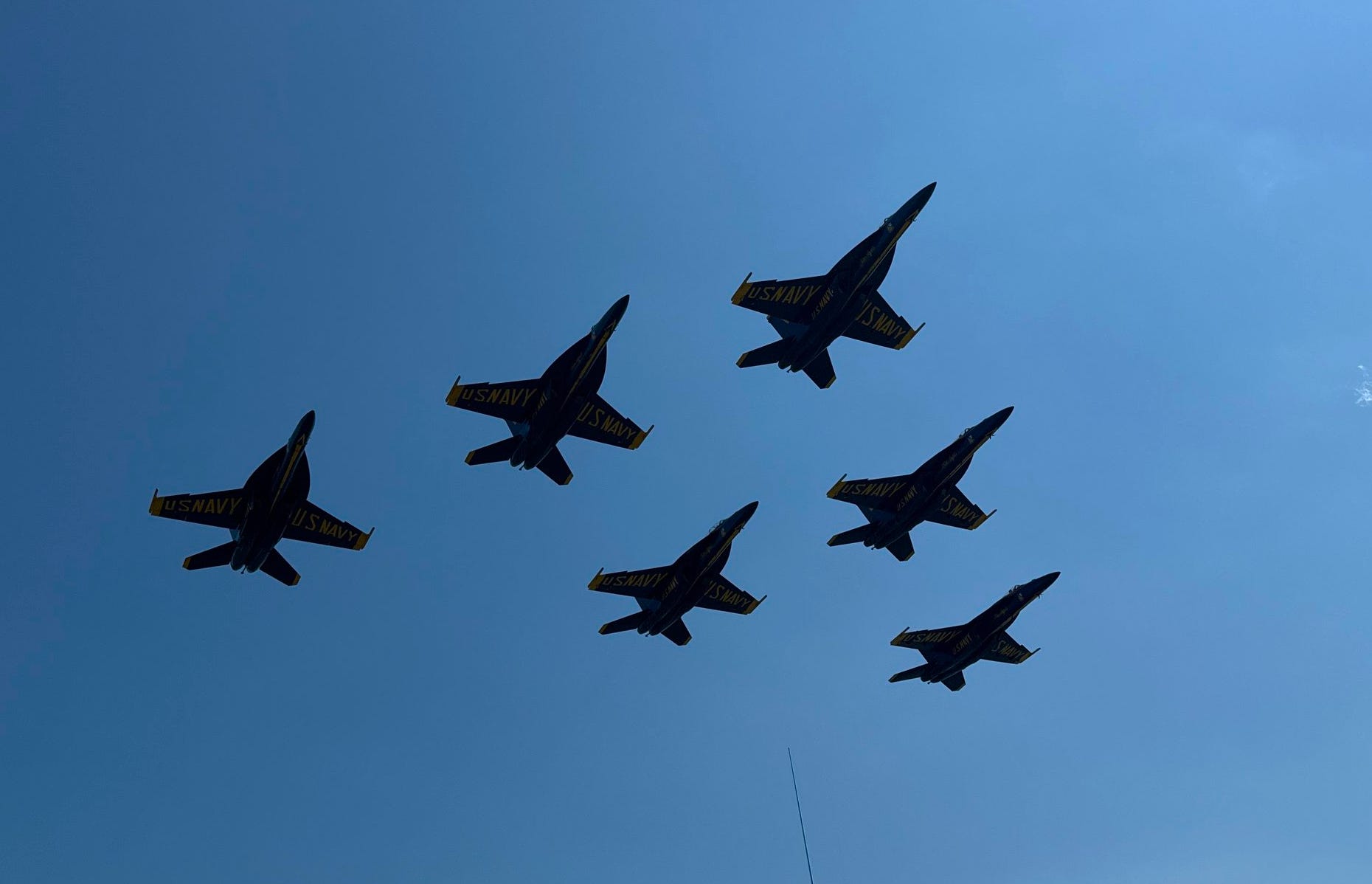
This afternoon, I had the privilege of watching the U.S. Navy Blue Angels fly over Annapolis, Maryland during U.S. Naval Academy Commissioning Week for the Class of 2026.
The day started with a partner event, which feels like the right place for this short story to begin. We spent the morning talking about the things we always talk about in business when the conversation is good: customers, relationships, execution, trust, strategy, and how to make sure partnerships actually create value instead of just creating more meetings.
Then, later in the day, we got on a boat and headed out onto the water to watch the show.
That sounds calm and almost vacation-like, but Annapolis during Commissioning Week is not exactly a quiet little cove where you accidentally catch a fish and pretend you knew what you were doing. There were boats everywhere. People were looking up before there was even anything to see. Phones were ready. Kids were pointing at every sound in the distance. Adults were pretending to be composed, which lasted about as long as you would expect.
Then the Blue Angels arrived, and whatever conversation was happening on the boat simply stopped.
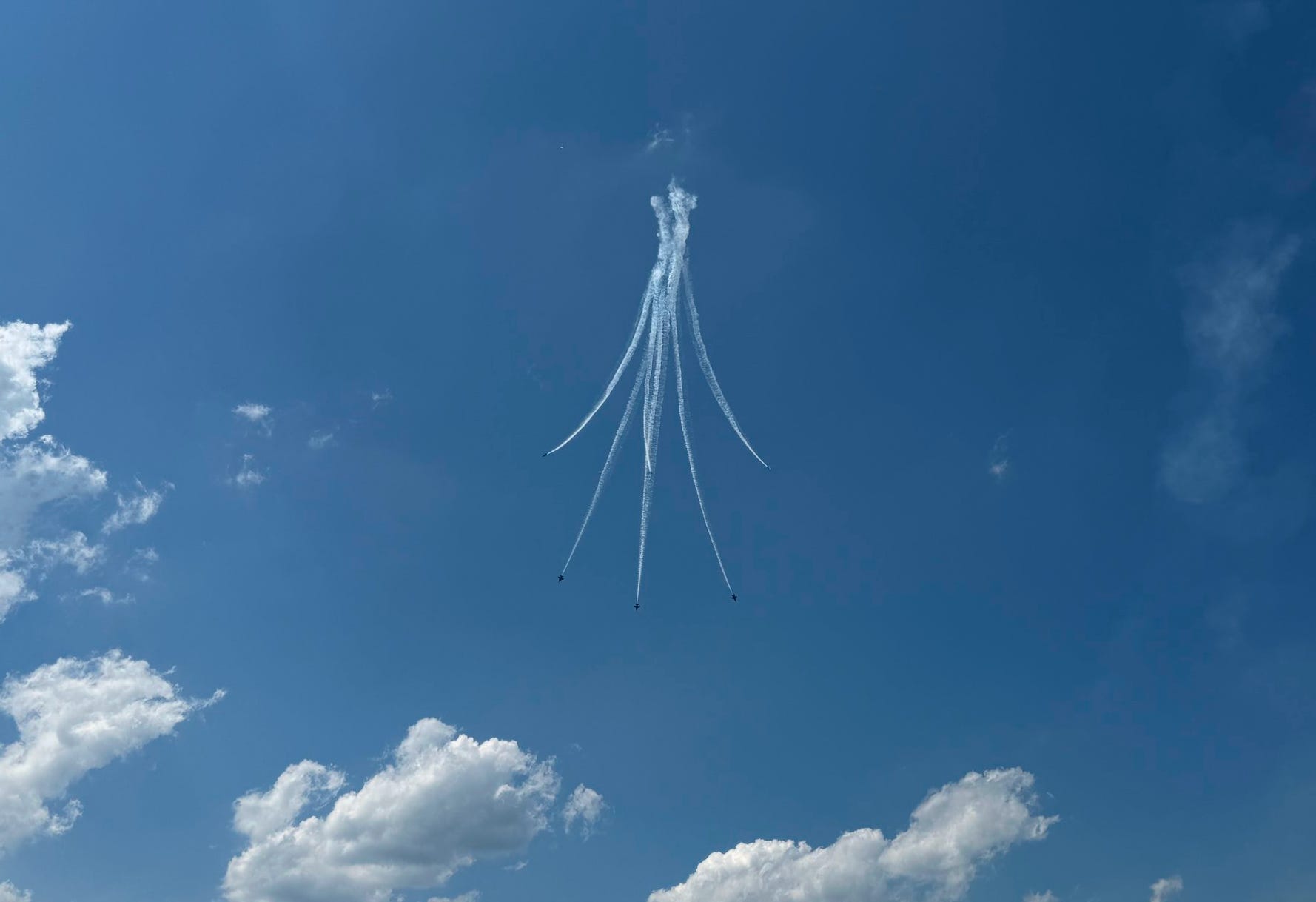
What makes the Blue Angels so breathtaking is not just that they fly fast. Lots of machines can go fast.
It is the combination of speed, proximity, engineering, preparation, and human judgment happening all at once.
The team flies the Boeing F/A-18 Super Hornet, a twin-engine, carrier-capable fighter aircraft built for missions that include air superiority, fighter escort, reconnaissance, aerial refueling, close air support, and precision strike. It is not a prop for an airshow. It is a serious piece of naval aviation engineering, adapted for demonstration flying but rooted in combat aircraft design.
During a Blue Angels demonstration, the fastest maneuvers reach roughly 700 mph. Their slowest maneuvers can be around 120 mph. Some passes happen as low as 50 feet above the water. The diamond formation can fly as close as 18 inches apart. Not 18 feet. Eighteen inches. Less than the width of a carry-on suitcase, between aircraft moving at speeds where most of us would struggle to keep our coffee from becoming a cockpit incident.
There are certain things that make you feel small in the best possible way. A mountain range can do it. The ocean can do it. Standing in a stadium during the national anthem can do it. Watching seven aircraft carve across the sky over Annapolis at speeds that do not feel like they belong in normal human experience can absolutely do it.
But what surprised me was how the feeling kept building.
The first flyover gave me goose bumps. That would have been enough. The sound hit first, then the aircraft appeared, then they were gone almost before my brain could catch up. Everyone on the boat reacted at once, in that strange way people do when something is too impressive for normal words.
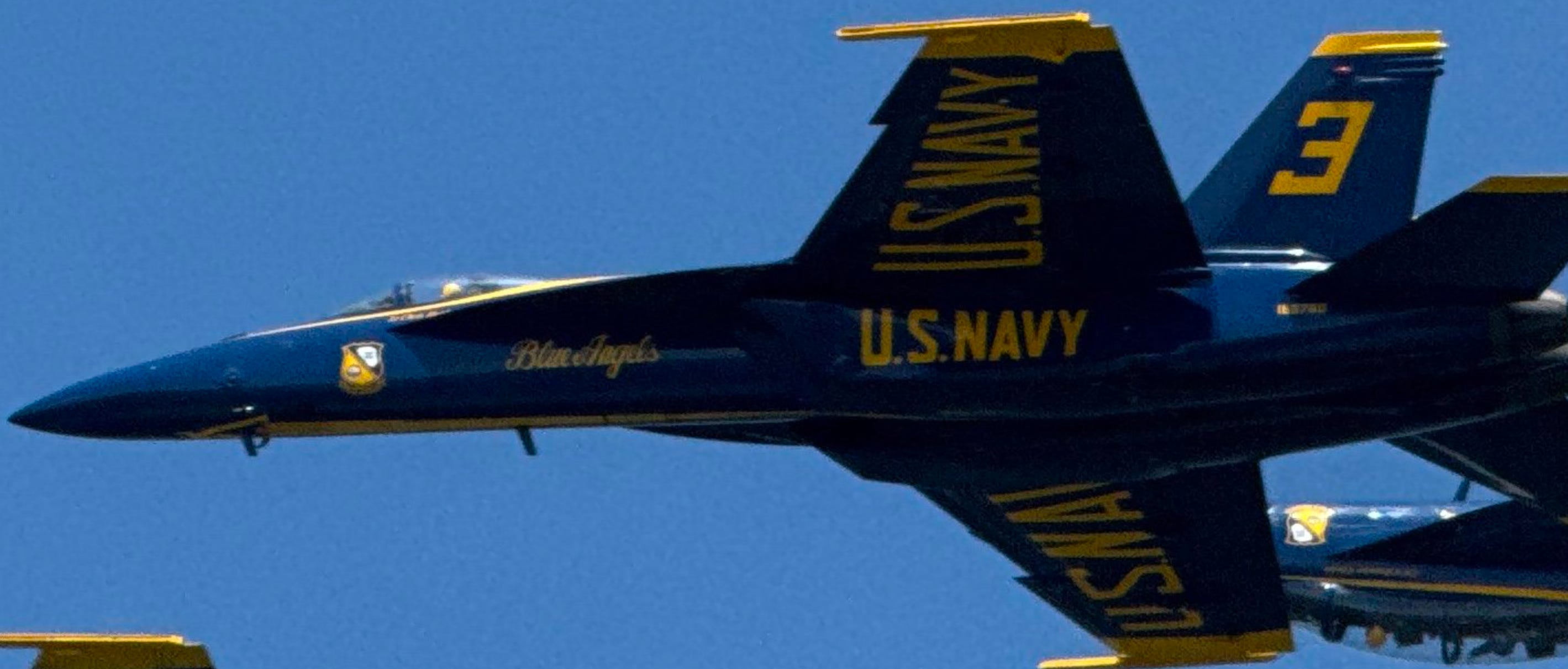
Then came the next pass, and somehow the goose bumps got bigger.
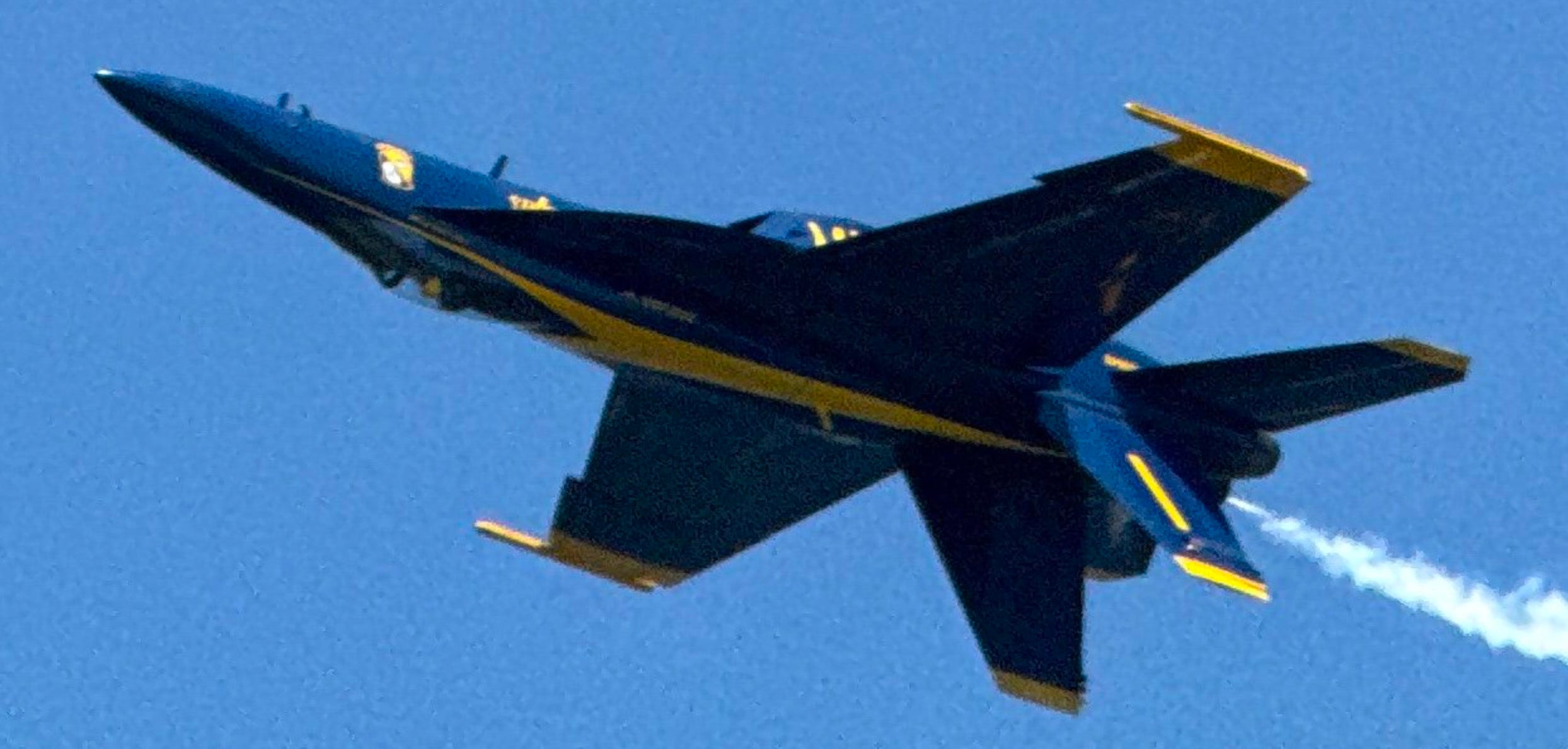
I did not invert this image, this is a real picture of the flyover at about 150 feet over my head.
By the third flyover, I realized I was not just reacting to the noise, the speed, or the precision. There was a deeper feeling underneath it. Pride is probably the closest word, though even that feels a little too small. Not the performative kind of pride people sometimes manufacture for social media captions, but the kind that starts in your chest before your brain has time to organize it into language.
It was pride in the aviators, of course, but also in the ground crew, the mechanics, the planners, the standards, the Naval Academy, and the young men and women walking through Commissioning Week and into service. It was pride in watching something done with that much commitment and discipline. It was pride in seeing excellence that could not be faked.
Because that is what struck me most.
The show looked effortless from the water, but nothing about it was casual. Every turn, every formation, every pass over Annapolis represented thousands of hours of preparation compressed into a few seconds above our heads. The public sees the aircraft. We hear the engines. We feel the sound in our chest. We take the pictures.
But what we are really watching is trust made visible.
And that is where my mind went back to the partner event from earlier in the day.
Not because business is the same as naval aviation. It is not. Not even close. Our jobs are not life and death, and I do not want to cheapen what those pilots and crews do by pretending the stakes are comparable.
But maybe that is exactly why the lesson matters.
If trust, preparation, discipline, honesty, standards, and personal integrity are non-negotiable when the stakes are that high, why do we sometimes treat them as optional when the stakes are “only” business?
Appreciate you reading.
Dmitry Gorbatov
© 2025 Dmitry Gorbatov | #dmitrywashere